What’s Really in the Feed Bag?
September 10, 2026 · Educational Articles

A Vets Practical Guide to Reading and Understanding a Horse Feed Label
The foundation of success for horse owners and their equine partner starts with nutrition. However, when walking into a feed store, it can be overwhelming seeing all of the choices and understanding which choice is most advantageous. It is important to consider that every horse has different nutritional requirements. Factors such as age, current job and activity, goals the owner has, and what else is included in the horses’ diet, such as hay and supplements, all play a role. Knowing this is pertinent in the journey in selecting the best feed. Once this information is known and considered, find the tag stitched to the bottom of the bag. This will list the percentage amount of protein, fat, and fiber as well as amounts of vitamins and minerals.
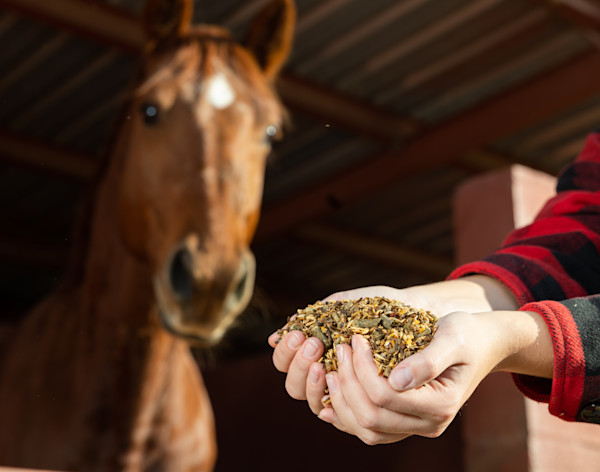
What is included in the feed label?
The options of feed can be narrowed down simply by looking at the product name. The name of the feed and purpose statement reflect the intended use of feed, such as growing foal, performance, lactating mare, and more.
The amounts of specific nutrients contained in the feed could be found in the guaranteed analysis. For equine formula feeds, commonly listed guarantees include crude protein, crude fat, crude fiber, calcium, phosphorus, copper, selenium, zinc, and, when added, vitamin A. Other ingredients of special interest to the diet might also be included here, such as biotin or vitamin E.
Crude Protein
A minimum percentage of crude protein is listed and is often the value owners place the highest value in, however it is important to consider other factors as well. Crude protein is needed for muscle development and maintenance along with synthesis of hormones and enzymes. Therefore, growing horses and broodmares require a higher protein content than a horse who is not in work.
Crude Fat
The crude fat percentage is partially indicative of the energy content, as fat is very energy dense. This means that the higher the minimum percentage of crude fat, the higher the calories provided, which means less feed is needed to meet the horses’ energy requirement.
Crude Fiber
In conjunction with the crude fat content, crude fiber is also indicative of the energy content. Most grains are low in fiber as hay and other forages are high in fiber. It is an important component of a horse’s diet for digestive tract function.
Calcium and Phosphorus
These minerals are critical in a horse’s diet as they play a role in development, repair, and maintenance of the musculoskeletal system. Growing horses and horses in production will have a higher requirement for these minerals as opposed to a horse at maintenance. These two minerals can also be found in forages. Some feeds will consider the calcium and phosphorus content in forages to formulate their diet and may recommend which forage is most appropriate. An example of this is that legume hay, such as alfalfa, is typically higher in calcium content than grass hay. Therefore, the horse will not need as much calcium in their grain if they are eating alfalfa as compared to a horse on grass hay.
Copper, Zinc, and Selenium
You will find these minerals listed in ppm, parts per million, as they are required in small amounts. Feeds contain these to ensure adequate intake as the concentration in forages can be variable.
NSC
For owners with horses with potential metabolic concerns, their vet may discuss starting a feed with low NSC, non-structural carbohydrates. Non-structural carbohydrates include simple sugars and starches, which can be used for quick energy in horses in performance work. Ingredients that are typically high in NSC include corn, oats, and barley, while beet pulp, soy hulls, and rice bran are typically lower in NSC. These ingredients can be found on the ingredient list on the bag of feed.
Before entering the feed store, the most critical step is evaluating the horse that will be on this diet in terms of age, weight, current workload, individual health needs, pasture, hay, and other supplements. The information on a feed bag is there to assist owners in choosing the best feed for their horse. Besides the guaranteed analysis found on the stitched tag, manufacturers will include the purpose statement and ingredient list. They also may include recommendations for how much feed should be fed, feeding management, and forage supplementation. When in doubt, remember that veterinarians are always there to help formulate a nutrition plan to help owners and horses achieve their goals, whatever they may be!
